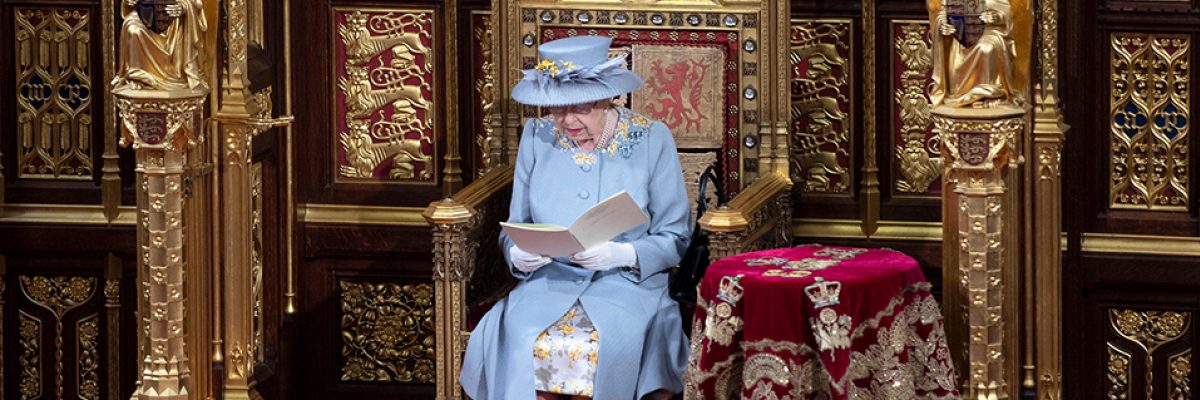
The Rhetoric of the British Queen
Queen Elizabeth II of Great Britain entered history as the first media monarch with the greatest number of addresses to the nation. All her speeches had an official, restrained character, except for a select number of speeches that can be characterized as oratorical.
Elizabeth was the first princess to make a radio address to her peers during World War II, the first monarch to record a televised Christmas greeting, and the first monarch to achieve an unprecedented level of popularity and recognition through modern media technologies, along with the entire royal family. This forced the queen, after the tragic death of Diana, to make a special address to the nation at the demand of the government and the people themselves.
Let us examine three key speeches by Elizabeth II that will go down in history with her.
Address to the Children of Britain During the War
October 13, 1940
This was the first public address by the future queen. The speech was broadcast on radio with the aim of expressing support on behalf of the royal family to the children of Great Britain who were forced to leave their homes due to the war, and also to inspire them for a happy future.
For this, the future queen began with the rhetorical device of unification:
"In wishing you all 'Good evening,' I feel that I am speaking to friends and companions who have shared with my sister and myself many a happy Children's Hour."
This leitmotif Elizabeth used throughout her life, as her main goal was to strengthen and unite the British nation.
She concluded the speech, in accordance with this idea, with inspiration and hope:
"We know, every one of us, that in the end all will be well; for God will care for us and give us victory and peace. And when peace comes, remember it will be for us, the children of today, to make the world of tomorrow a better and happier place."
The first Christmas television address by a British monarch
December 25, 1957
This format of speech was more complex than a radio address, as the text of the speech could not be read, and one also had to look into the camera – this began to develop the oratorical qualities of the British queen.
Elizabeth II began her speech with the device of appealing to the authority of predecessors (previous kings), strengthening her still unconsolidated power, as well as the device of identifying herself with the audience:
"Twenty-five years ago, my grandfather broadcast the first of these Christmas messages. Today is another landmark because television has made it possible for many of you to see me in your homes on Christmas Day. My own family often gather round to watch television as they are this moment, and that is how I imagine you now."
Further, Elizabeth II uses the device of identification through shared values to unite with the people:
"That some of you can see me today is yet another example of the speed at which things are changing around us. Because of these changes, I am not surprised that many people feel lost and unable to decide what to hold onto and what to reject. How to take advantage of the benefits of new life without losing the best of the old."
The queen concludes her speech with hope for the future:
"I believe in our qualities and our strength, I believe that together we can set an example to the world, which will encourage upright people everywhere. I hope that 1958 may bring you God's blessing and all the things you long for. And so I wish you all, young and old, wherever you may be, all the fun and enjoyment and the peace of a very happy Christmas."
Emotional Address Regarding Diana's Death
September 5, 1997
This address almost never happened. The princess was divorced from Charles, and the queen considered her separated from the family. But the media, which contributed to the popularization of the queen herself, similarly contributed to Diana's popularity. Therefore, the public and the government forced the queen to treat Diana as a member of the royal family and deliver a speech. Without these steps, Britain could have fallen into a monarchical crisis.
The purpose of this speech was to demonstrate to society the sharing of feelings with it and to emphasize her status as a representative of the people.
The queen began her speech with the device of identification through shared experiences:
"Since last Sunday's dreadful news we have seen, throughout Britain and around the world, an overwhelming expression of sadness at Diana's death. We have all been trying in our different ways to cope. It is not easy to express a sense of loss, since the initial shock is often succeeded by a mixture of other feelings: disbelief, incomprehension, anger—and concern for those who remain. We have all felt those emotions in these last few days. So what I say to you now, as your Queen and as a grandmother, I say from my heart."
Further, the queen shared a common memory:
"All who knew Diana will never forget her. Millions of others who never met her, but felt they knew her, will remember her. I, for one, believe that there are lessons to be drawn from her life and from the extraordinary and moving reaction to her death. I share your determination to cherish her memory."
The British queen concluded with an encouraging future:
"I hope that tomorrow we can all, wherever we are, join in expressing our grief at Diana's loss and gratitude for her all-too-short life. It is a chance to show to the whole world the British nation united in grief and respect. May those who died rest in peace and may we, each and every one of us, thank God for someone who made many, many people happy."
The goal of all key speeches by British Queen Elizabeth II was to show her closeness to the people, to unite them, and to give hope for the future. This she accomplished exemplarily with both her words and her actions.
Her rhetoric can teach us two main things: always be sincere, and inspire people by your own example.
Mykola Ovcharov
September 9, 2022