New Year and Christmas Addresses
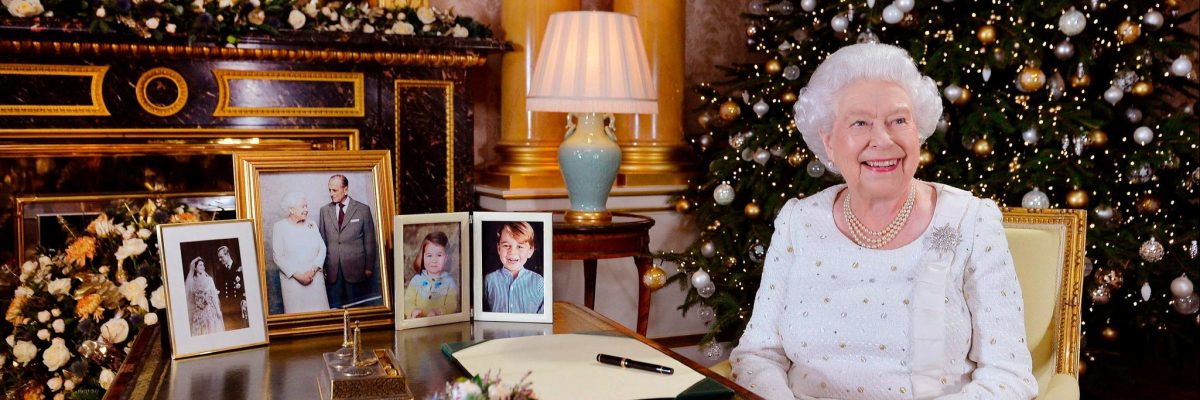
Every year, the British monarch addresses all nations that are part of the Commonwealth at Christmas. Similar addresses are given by the King of Spain and the King of Sweden, as well as the presidents of the USA and Germany. Some leaders speak not at Christmas, but on New Year’s Eve. Examples include the President of Italy, Chancellor of Germany, presidents of Ukraine and Georgia, and many others.
What is the history of these addresses and why did leaders begin to deliver them?
The root of this history lies in religion. On the eve of Christmas or another religious holiday, a religious leader addresses their community with a message. The purpose of such messages is to provide guidance, draw attention to true values, referencing dogmas and quotes. In this way, the leader unites their community.
Later, following the model of religious organizations, a political model of society was built, where the leader was a monarch, and later a president. It can also happen that the same person performs both religious and political leadership functions. For example, in Great Britain, the monarch is both a religious leader – head of the Anglican Church, and political, that is, head of state. The British monarch can deliver both state speeches and religious ones.
Where this doesn't exist, political leaders began to regularly address society, but primarily on holidays that don't belong to religious ones, but to those created by the political model – for example, Independence Day or Constitution Day.
Some holidays were artificially created in opposition to Christmas. This is the New Year – now a beloved winter holiday. It was especially promoted in countries with atheistic state ideology, that is, in the USSR.
Christmas addresses began to play a special role with the advent of radio and television. Before this, there was no possibility to address everyone, and this was not given such importance. But in 1932, the BBC director proposed to the King of Great Britain to address the people by radio with a Christmas address. He agreed and established the tradition of annual Christmas addresses, which moved to television in 1957 and appeared on the internet in 1997.
Today, practically all political leaders make such addresses with the goal of uniting society through tradition and values, as well as motivating it for development or emotionally supporting it during difficult times. These addresses became central because Christmas or New Year is the most anticipated holiday. Political leaders use it for their purposes, understanding in what emotionally elevated mood it will be heard.
Most Significant Addresses in History
History knows several iconic addresses. The New Year addresses of 1988 in the USSR and USA became symbolic. Then USSR President Mikhail Gorbachev and US President Ronald Reagan exchanged good wishes: the head of the USSR congratulated the residents of the USA, and the US president congratulated the residents of the Soviet Union with the New Year. Residents of Soviet republics heard mention of God in Reagan's New Year address for the first time. This signaled the ending of the Cold War and the beginning of the USSR's collapse.
1997 was a difficult year for Queen Elizabeth. That year, Princess Diana died, and the Queen was accused of indifference to this event. Britain appeared to be on the verge of a monarchical crisis. The Queen had to address the people in August with a speech about Diana, and later mention it again in her Christmas message to console society. This Christmas message became the first to be published on the internet. The crisis was averted.
A similar instance occurred in the USA: in 1963, when Kennedy was killed, the entire country was in mourning. Instead of lighting the Christmas tree, a memorial vigil with candles was held at the Lincoln Memorial.
Structure of a typical new year or christmas address
What does the script of a festive address usually consist of?
Greeting and a specific address to your audience. For example, "colleagues," if you're addressing employees, or "Americans" or "American people," if you're the US president.
Next, it's necessary to characterize the past year, reducing it to several significant events. First the unpleasant ones, for example, earthquakes or strikes. Then pleasant ones: for example, football team victories in championships or gold medals at the Olympic Games.
Then you need to give guidance for the next year and define guidelines. In religious organizations, they usually quote scripture. In politics, you can quote national heroes and set goals for the coming year.
The next step is to address the public with humanistic wishes. In the format of "person to person" or "person to families."
Conclude with wishes for a Happy Christmas or New Year.
Now each of you can write and deliver a New Year or Christmas greeting for those who are important and dear to you.
Example of an original address
Dear listeners! Dear like-minded people!
This year has been difficult for each of us. We faced new challenges of the pandemic and economic crisis, but despite this, we stood firm and became even stronger. We can be proud of ourselves and those who saved us, as well as those who inspired us.
This year revealed new sports figures, who claimed medals at the Summer Olympics. We cheered for everyone and were proud of every medal. We worried about our teams, but rejoiced at Italy's incredible victory at the European Football Championship. This year gave Anthony Hopkins his second Oscar and showed us the touching animated film Soul, which also received the main film award.
This year taught us to be brave, made us emotionally stronger, allowed us to be proud and express our emotions, whatever they might be. This year allowed each of us to be ourselves. Thank you for this! And thank each of you for motivating me to develop and move forward!
I am confident that incredible discoveries, achievements, and victories await us in the coming year.
Be happy! Happy New Year and Christmas!
Mykola Ovcharov
December 24, 2021