How Not to Speak (Using the Example of Clinton and Trump)
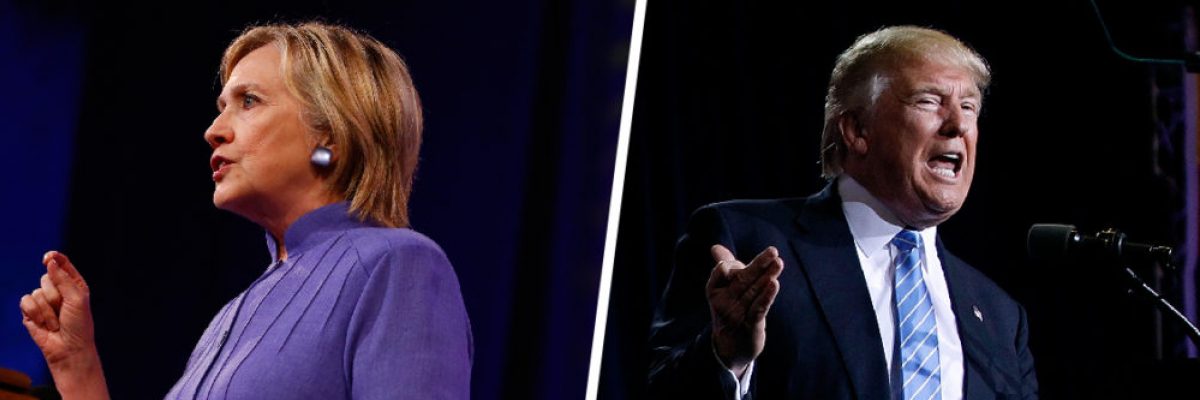
On September 26, 2016, the first debates between US presidential candidates Donald Trump and Hillary Clinton took place. These debates became an excellent example of how not to construct a public speech.
Form is often seen as much more important than the content of a speech, but this effect is short-lived. If the content is empty, the speaker won't last long on form alone. This is exactly what happened during the American politicians' debates. Vivid gestures, distinctive character, charisma – these are Trump's key tools, and for the first 10 minutes it was much more interesting to observe him specifically. However, when it came to taxes and adopted laws, Clinton had stronger arguments.
What mistakes in nonverbal behavior did the candidates make?
Many topics that the speakers discussed are interesting to the majority of US citizens. The public perceives the speaker emotionally, not guided by logic. Trump used this momentum: he behaved aggressively to seem more convincing. Typical choleric behavior. This really works if arguments are presented in simple form. But if the information is complex, then Trump's manner of behavior is perceived as ordinary aggression.
It manifests not only in facial expressions and intonation, but also in gesticulation: sharp categorical gestures, often pointing. The posture is tense. It's very noticeable that Trump practically the entire time held onto the podium with both hands. Such a form of gesticulation is often seen as socially unacceptable for a speaker in modern society: it repels viewers.
Clinton understood this, so she behaved calmly, even relaxed. She smiled, often joking about Trump while discussing complex topics. A smile is the best reaction, so Clinton reacted to the debates as most of their listeners did.
How can rhetorical techniques turn against the speaker?
Practically from the very beginning of the debates, Donald Trump used the technique of addressing Hillary Clinton as "Secretary Clinton." I think this technique was thought out by Trump's team in advance. The goal was to draw the audience's attention to the past of "Secretary Clinton." Donald Trump mentioned several times that Clinton had been in politics for 30 years.
With this address, he emphasized Hillary Clinton's secondary role in the country's political life and suggested she held responsibility for Barack Obama's mistakes. Clinton, meanwhile, presented arguments that fully confirm the correctness of previous decisions and actions of the current administration.
The turning point was the question about why Trump wouldn't publish his income tax returns. Trump replied that he hadn't published them yet because a tax audit was ongoing. Then he stated that voters would be able to familiarize themselves with his returns when Hillary Clinton published 30,000 emails from her electronic mail.
Why can accusations be effective or disastrous?
Tax payment is a fundamental issue for Americans, one could say sacred. Therefore, Americans couldn't understand what Clinton's emails on her personal electronic mail had to do with it and why his lawyer was still forbidding Trump to publicize this declaration.
Immediately after Donald Trump's statement, Clinton explained to viewers that her opponent, being a great businessman and billionaire, doesn't want to publicize his declaration, possibly because Trump's assets are different. Most likely, the volume of his assistance to other individuals also doesn't correspond to his claims.
During the debates, several accusations were made. The stronger speaker was the one who expressed concrete complaints about the opponent's activities. Donald Trump accused Hillary Clinton of being responsible for everything that had happened in the last 30 years. For everything – meaning, nothing concrete. Such an accusation is easy to respond to.
Hillary Clinton accused Donald Trump of hiding his tax and financial information because he's afraid to show the truth. The second thing Clinton used was the accusation that her opponent doesn't pay his debts. As an example, she cited the case with the golf club architect who was present in the hall during the debates.
In conclusion, I'll say that the US presidential candidates' debates were not very informative. The speakers used insufficiently effective argumentation and often resorted to personal attacks. Such a form of debate has essentially exhausted itself and cannot be used for teaching beginners and experienced speakers. Don't repeat these mistakes. Be interesting speakers!
Mykola Ovcharov