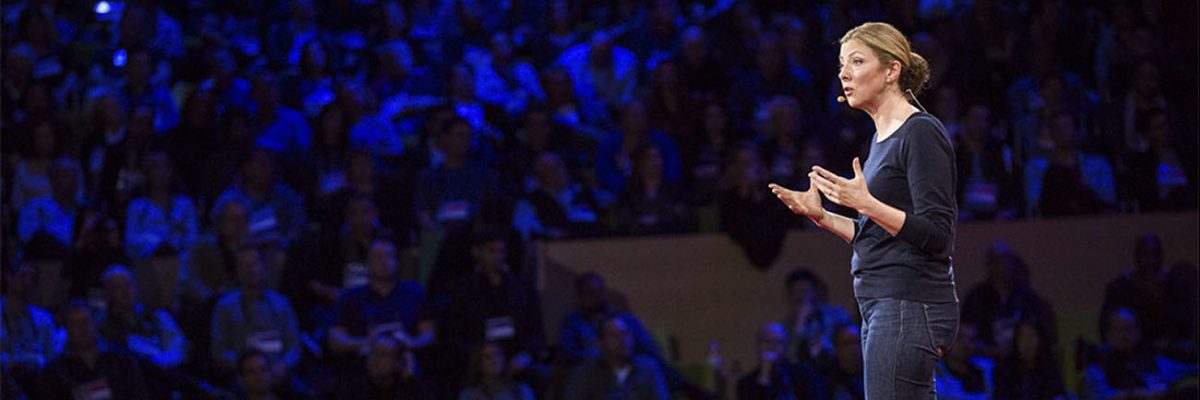
About Gesticulation
In communication, we use three main languages: verbal (speech), nonverbal (body movement), and the language of emotions. For verbal language, it's important to develop voice, rhetoric, intellect, and expand vocabulary and horizons. For nonverbal language, it's necessary to develop the body, particularly hands and fingers. In addition, study gesture language and analyze your own gestures. For the language of emotions, it's important to study, recognize, and identify emotions, as well as emotions of other people – to develop emotional intelligence.
Exceptional understanding and control of these three communication tools gives us the ability to manage situations and achieve our goals.
Gestural language, like the language of emotions, humans began using before verbal language. However, the latter did not replace the previous languages. On the contrary, verbal language supplemented them for more effective communication between one person and another, as well as between a person and society.
What do studies of nonverbal communication show?
Practically all animals use gestural language. This is most vividly manifested in apes, whom scientists tried to teach verbal speech, but unsuccessfully, because they have a different structure of the speech apparatus and control centers in the brain. But gestural language in apes is wonderfully developed. And the experiment in teaching apes sign language alphabet was crowned with success.
In 1965, an experiment began at the University of Nevada to teach sign language to the chimpanzee Washoe. At first, people taught her, and then she only observed people and learned gestures independently. By the end of the experiment, Washoe had learned about 350 gestures and independently learned to use them, and also passed them on to her children.
This experiment testifies to two things: people, like animals, use gestural language as one of the main ones. Also, people, similar to animals, learn by observing each other's nonverbals. Nonverbal language is a source of information for both animals and people.
Scientists from the University of Salford in Manchester identified 19 different gestures that dogs use to communicate with humans. Similar language is used by infants to interact with parents. This is called referential gestures. With their help, an infant communicates with parents, and when they grow up, they continue to use this language of gestures and emotions, but differently.
Such data tells us that gestural language and emotions are primary languages, while verbal language is the result of evolutionary intellectual activity. It caused the formation of the corresponding speech apparatus and development of separate brain zones for this function.
What types of gestures exist?
We all unconsciously use gestural language, and our task is to consciously control and manage it as much as possible. This is possible if there's sufficient knowledge, desire, and practice, as a result of which conscious nonverbal technique becomes a skill.
To begin, let's define what types of gestures exist and what information they convey. Closed gestures are hands, legs, and head in defensive positions. Fine motor skills convey the speaker's excitement. Doubt is expressed in sluggish gestures, uncertain posture, poor posture, and darting gaze.
Open gestures mean absence of constraints, but without conveying meanings. Open meaningful gestures constantly convey messages. They are read, but because there are many of them, effectiveness – the indicator of their understanding – is low.
Open meaningful and appropriate gestures presuppose perfect mastery of nonverbal technique. Such gestures are used exclusively with content, and only when they are needed to strengthen your messages.
How to develop gesture language?
We all unconsciously use gesture language. Our task is to do this consciously, control and manage gestures as much as possible. And this is possible if you have sufficient knowledge, desire, and practice, as a result of which conscious nonverbal technique becomes a skill.
Take care of physical form – an indicator of confidence, ease, and clarity in nonverbal technique. Do exercises for hands, fingers, as well as speech exercises for voice and speech, and also small physical exercises that develop plasticity, flexibility, and strength. Dance, pantomime, acrobatics, and gymnastics also contribute to physical development.
Constant training in front of a mirror with maximum use of meaningful gestures is effective. At the training or rehearsal stage work with text on words and expressions that can be emphasized with appropriate gesticulation. Bring gestures to automation in everyday life. They should become automated in public speeches or during important negotiations.
Analyze your nonverbal technique, identify mistakes, and correct them in subsequent speeches. Pay attention to visual art, where the main communication tool is nonverbal language. This refers to silent films, performances by Marcel Marceau, and performances by Charlie Chaplin's great-grandson James Thierrée.
Conscious use of nonverbal language, that is, gestures, allows us to be more effective in communication, as well as control our state, particularly excitement. Therefore, this language needs to be studied, analyzed, and consciously applied.
Mykola Ovcharov